Showing posts with label potato. Show all posts

Friday, 10 February 2017

Potato, potatoe - affordable potato recipes around the world (gluten-free, vegan, kosher)

Stuck in a spud rut? Check out my tips  for affordable potato recipes around the world!

* * * 

If there's something I've recently realized it is this. Unlike, say, UN or common sense in this world, there really isn't much the humble potato can't do.


My recent cooking sessions have shown just how versatile a veggie it truly is. Mind you - the spud, originally from Peru, was not an instant hit upon its arrival in Europe back in 16th century. Originally it wasn't even deemed fit for human consumption and was only fed to pigs.

But eventually the gutsy crop broke through with its resilience even in our Arctic conditions where nothing survives. Back in 1950's the annual consumption per person was something as insane as nearly 190 kilos per year. As dietary diversity grew and Atkins instilled in us the fatal fear of carbs, the number has gone down to about one third of that. 


In my opinion the humble potato deserves to have its moment in the limelight though: it is cheap, it is good, it is ecological and actually the star ingredient of so many of my favourite dishes.

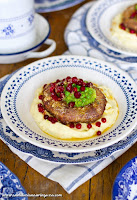
Such as this so-good-it'll-make-you-cry mash. Can't think of anything as comforting as this!


Proper mash is also what makes this Reindeer shepherd's pie so yummy.


For classically British taste buds there's also the traditional English shepherd's pie...


... and the slightly fancier fish pie I used to woo over my English mother-in-law.


And since no British Sunday Roast is perfect without the proper roasties, here's a twist that will take their Britishness up a dozen notches: Salt & Vinegar potatos!


But Finns are not alone with their love of all things potato - our Western neighbours Swedes are every bit as crazy about them. 

Hasselback potatos for instance swiftly became one of my most popular recipes ever. 


Sweden is also home to this delight: Hanna's herring and potato bake.


Herring, potato and eggs for somewhat of a holy trinity in Sweden and that's a combo that is celebrated both in this recipe for smoked herring spread...


... and in this peculiarly named recipe for  gubbröra. Which I'd like to emphasize was not made using old men. 


And is there a dish more classic (and suited for every hour of the clock!) than Jansson's temptation?


http://www.undertheandalusiansun.com/2016/12/janssons-temptation-swedish-potato-and.html


But potato is widely used elsewhere in the world, too, as my culinary crusades have taught me. From Greece I brought back recipe for skordalia, a garlicky potato dip...


...and from Bulgaria my souvenir recipes featured patatnik, Bulgarian mint and potato omelette.


And you don't need to look far for patatnik's European cousins - one can be found in a nother country that's become very familiar from this blog: Spain. 

Tortilla Española, por favor!


And while its name would bizzarely point to Russia, the recipe for Ensalada Rusa, one of my favourite potato salads ever, is firmly from Spain, too.  


And hey - there's also a recipe on the blog for German potato salad. 

With bacon! Jawohl!


Potato gives salads lovely richness and seeing how I don't see the point of those wispy-waspy leafy salads, it's one of my favourite ways to use potatos. 

Salad Nicoise is a classic for a reason. Mon Dieu, how good it is!


And this Mediterranean potato salad is one of our picnic staples year after year - it's gluten-free,vegan and kosher. 


Oh, and you know what else? Pizza. Oh, yes. Potato in a pizza.


As long as you choose the right kind of potato, there isn't much you couldn't do with it. Such as soups. Such as Vichyssoise, which is every bit as divine served cold or hot.


Oddly  enugh,  while consumption of potatos is decreasing in the Western world, it's on the rise in regions such as Far East.
And once you've tried my Massaman curry with chicken, I think you'll reach for seconds, too.


Poatoalso help with textures, allowing many dishes to be made gluten-free. Secret to these Tunisian fish keftas? You guessed it: potato. 


Let's hear from you guys! What's your potato favourite? Have you tried any of these recipes?


___________________


ANYONE FOR SECONDS?


Andalusian auringossa_Hasselbackan peruna_gluteeniton_vegaani_kosher         


SHARING IS CARING!

Sharing is caring Share to Facebook Share to Twitter Email This Pin This

Wednesday, 8 February 2017

Hasselback potatos - one of the best things you can make out of potatos (vegan. gluten-free, kosher)

* * * 
Hasselback potatos is a Swedish classic and one of the best side dishes in the world! 

* * * 


Many interns probably don't have terribly great experiences of internships. Sure, being forced to tolerate humiliation and getting treated like a second class monkey is awfully efficient method of character building, but at least in my experience rarely leads to actual employment. And why would it - who'd want to actually pay you for something they can always get someone to do it for free by labeling it as "world experience"?

My experiences range from weird to good. I've been answering phones and making coffee (just guess if university degree was actually required for even those jobs?) but then I've also managed to amass experiences such as Finnish Embassy in Tunisia. 

I was fortunate/ unfortunate (much like beauty, this one's in the eye of the beholder) to move into the country mere days after their revolution, which went on to ignite the Arab Spring the aftermatch of which still conties today; six years on. The unique timing mean I really got my hands dirty, for reporting back to Ministry of Foreign Affairs from the refugee camps on Libyan border to photographing demonstrators being shot to death at my door step.


Andalusian auringossa_Hasselbackan peruna_gluteeniton_vegaani_kosher


Ah. Interns, those unsung heros. It's not often they get to leave their mark in history, but sometimes it does happen. Such was the case of Hotel Hasselbacken's restaurant and Leif Elisson, a cook student from Värmland working there in 1953.

Leif got an idea to elevate the humble potato to a whole new level. The result was instant classic (named after the hotel of course and not him...) : Hasselback's potato. Just imagine if they'd had Instagram back then - that Eureka moment would have totally gone viral and within the next 48 hours we'd have all been emptying the potato sehelves in supermarkets across the world!

60 years on Hasselbacken's hotel and restaurant still stand next to Djurgården; still serving this dish on their menu. Go, Leif!


Andalusian auringossa_Hasselbackan peruna_gluteeniton_vegaani_kosher


As a side dish for 4-6 people


Hasselback potatos:


6 largeish baking potatos
6 tbsp butter( margarine/ oil
4 cloves garlic, peeled and bruised with the back of the knife
3 sprigs rosemary
salt, white pepper
2 tbsp bread crumbs (gluten-free if needed)

Measure butter, garlic and rosemary into a small pot. Melt over high heat until the butter stops foaming. Remove from heat and let the flavours infuse the butter while you prepare the potatos. Pre-heat oven to 225°c (in a convection oven 200° should do). 

Peel the potatos and pat dry (if you're using thin-skinned potatos, you can also use them as they are).

Using a sharp knife, cut incisions into the potatos a couple of mm apart form each other, being careful not to slice the potatos all the way to the bottom. The easiest way to do this is to cut the potato while resting it on a wooden spoon as this will prevent the knife from accidentally cutting all the way through.

Place the potatos into a buttered/ greased oven proof dish. Brush them generously with half of the butter and season (equaly generously) with salt and pepper. Bake at 225 for 25 minutes. 

After 25 minutes brush the potatos with the remaining butter (and the butter on the bottom of the dish) and scatter bread crumbs on top of the potatos. If you want, you could also insert rosemary leaves into the incisions, which will have started to open up by now. Continue cooking for another 25-35 minutes (depending on the size) until potatos are cooked and soft all the way through.

Serve. For instance with steak or fish.  


Andalusian auringossa_Hasselbackan peruna_gluteeniton_vegaani_kosher


You can also let your imagination run wild with these babies (Iäm sure Leif would approve).

You could subsitute some or all of the bread crumbs with Parmesan. Or you could add crunchy bacon bits into it (can I get an Amen?). When serving these with fish, you could combine bread crubs with chilli flakes and/ or finely grated lemon zest. 


Andalusian auringossa_Hasselbackan peruna_gluteeniton_vegaani_kosher_PINTEREST


Familiar with Hasselback's potatos yet? How would you pimp yours?

___________________


ANYONE FOR SECONDS?


Andalusian auringossa_Wallenbergare_husmanskost      


SHARING IS CARING!

Sharing is caring Share to Facebook Share to Twitter Email This Pin This

Thursday, 15 December 2016

Jansson's temptation - Swedish potato and anchovy bake (gluten-free, kosher)


* * * 

Jansson's temptation is a Swedish comfort food classic and one of their most beloved Christmas staples. It is as easy as it is delicious - this is not the time to scrimp on butter and cream!


* * * 

My, my, the blog has celebrated the humble potato lately! First I shared my secrets to the perfect mashed potatos and then I started rolling out souvenirs from my trip to Bulgaria in the form of patatnik, potato and mint omelette.

Now I'm introducing you guys to a Swedish classic that could not be better suited for this time of the year: Jansson's temptation. Though the dish, named after a Swedish opera singer and a bona fide bon vivant,  has become a crucial part of the Swedish Christmas feast, its roots are actually in a completely different kind of merrymaking. 

Pella Janzon, you see,was known not just for his bass bariton, also for the parties he threw after the performances; feasts that consisted of beer, schnapps and anhovy gratin. Later it has become a popular late night/ early morning snack.
The tangy saltiness of the anchovies, richness of the cream, comforting nature of the potato and the sweetness of the onions is a combination I've loved since childhood - well, after my parents finally managed to convince me (ever the cheese phobe) that the dish contains absolutely no cheese, anyway. I'm sure that didn't take much longer than a decade...

The dish is easy and only requires a handful of ingredients. But, all the more reason to bear in mind the following tips:

- Take your time sautéeing the onions so they're properly soft as that's when their sweetness really comes out to play
- Use double cream. Don't even think about casting looks at those light cream atrocities or substituting it with fish stock. No. You can diet tomorrow. 
- Do not discard the liquid from the anchovies - mix it with cream and use it in cooking.

And then off to the most important thing:

- when we Scandinavians use the wor anchovy, we're not actually talking about anchovies (why we do that, then, is anyone's guess). 

Therefore I would not attempt to make this with the actual anchovies. Fish which in Scandinavia is sold as anchovy (or Jansson's fillets) is actually sprat, marinated in a very particular, salty, sweet and tangy mixture. You should be able to get your hands on them in Swedish/ Nordic shops. As an emergency plan you could also use marinated matjes herring (matjes sill) which you can pick up at any IKEA.

The puritanists would probably stone me for using chives, but I like the greenness and freshness they lend the dish. But, feel free to omit it.


Serves 6 - 8


Jansson's temptation - a Swedish potato and anchovy bake:


2 large onions (or 3 small ones)
8-19 large potatos (total weight 1 1/4 kg)
2 tins (á 125 g) marinated sprats/ Jansson's filéer
4-5 dl heavy cream
1 tsp black pepper
a bunch of chives

For frying: butter

Start with the onion. Peel and finely slice them and sauté, in a  couple oftablespoons of butter over low heat in a pan. In the meanwhile prep the remaining ingredients. 

Peel the potato, cut into slices and then into thin strips. Drain the sprats (reserving the liquid) and cut lengthwise in half. Finely shop the chives. Combine cream with the sprat marinade (1/2 dl), whisk until smooth and season with salt and pepper.

Grease the oven proof dish you're using with butter. Lay half of the potatos into the dish, followed by a  layer of onions, 4 tablespoons of chives, sprats and top with the remaining half of the potatos. 

Pour the cream mixture over the bake and sprinkle a couple of tablespoons of butter on top in small knobs.

Bake at 220 (in a convection oven 200 will do) in the lower part of the oven for about an hour. In case the bake starts getting too much colour for your liking, cover it with a piece of foil.

Scatter the remaining chives on top and serve!


Any of you guys familiar with this Jansson's temptation yet? Are you puritanists when it comes to Christmas traditions or have any foreign dishes made it onto your Christmas tables?


_________________


ANYONE FOR SECONDS?


Patatnik_bulgarialainen perunamunakas      


SHARING IS CARING!


Sharing is caring Share to Facebook Share to Twitter Email This Pin This

Friday, 9 December 2016

Patatnik - Bulgarian potato and mint omelette

* * * 

Patatnik, Bulgarian potato omelette gets its interesting flavour from... mint!

* * * 

If the scenery of the Bulgarian Rhodope mountains surprised with their Swiss look, so, too, does the most classic dish of the region: patatnik. This potato omelette is very much like its Swiss cousin rösti, though it's even closer to one of the most beloved Spanish tapas: tortilla Española!

Each mehana, a local beer house serving traditional food, has their own recipe for this staple. Some might contain other veggies, too (especially peppers), many include Bulgarian feta cheese - their pride and joy -  in theirs. One thing that they all have in common, though, is the use of mint; a peculiar herb that is surprisingly widely used over here.

Potato was only brought to Europe in the 16th century by the Spanish concquistadors and it didn't find its way to Rhodope region until mid 19th century. In many European countries the new arrival was met with suspicion and for a long time it wasn't even deemed fit for human consumption. Rhodopeans didn't exactly welcome potato with open arms, either: the village elders condemned it as "the Devil's apple". 

Slowly this humble veggie managed to prove its resilience in the harsh conditions and won over even this stubborn nation. And then everybody lived happily ever after!


Patatnik - Bulgarian potato and mint omelette:


10 largeish potatos (total weight about 1,4 g)
2 largeish onions (or 3 small ones)
4 eggs
4 tbsp fresh mint (or 2 tbsp dried)
1 tsp salt
1 tsp black pepper

for frying: butter

also: butter, bread crumbs (optional, gluten-free if needed)

Pre-heat oven to 220°c (in fan oven 200°c will do).

Peel and grate the potatos over a tea towel. Bring the corners together to form a bundle and squeeze out the excess liquid from the potatos. 

Peel and finely slice the onion. Sauté them in a pan in a knob of butter over medium heat until soft and translucent (this is optional though - if you want a short cut, you can add the onions to the potatos raw as well).

Beat the eggs lightly and season with salt and pepper.  Fold potatos and onions into the mix along wth finely chopped mint. 

Grease the pan you're using with a little butter and dust with bread crumbs or line the dish with a baking sheet. Pour in the omelette mixture and press until even and smooth. 

Top with a couple of knobs of butter and, should you want the top extra crunchy, a little bread crumbs.

Bake for 45 minutes. In case the patatnik starts to get too much colour, cover it with a piece of foil or a lid.

Cut into pieces and serve.


Serve it as is or for instance with another favourite discovery I made in Bulgaria: Elena ham! This dry-cured leg of local pork comes from the Northern part of the country and is very much like Jamón Serrano.

Any of you been to Bulgaria? Which dishes made an impression on you?


__________________


ANYONE FOR SECONDS?


SHARING IS CARING!


Sharing is caring Share to Facebook Share to Twitter Email This Pin This

Wednesday, 16 November 2016

So good it makes you cry: secrets of perfect mashed potatos (gluten-free, kosher)


Secrets to my perfect mashed potatos? Browned butter and caramelized onions. The result will have you in tears.


* * * 


Out of all the comfort foods I can't think of anything more comforting than mashed potatos. But sure enough, there are mashes and there are mashes. A couple of tricks will make even those just-add-water-instant-mash-powders edible, but let's face it: the best one is always made from scratch.

You'll find my love letter to my Dad's mash on the blog over here. It has made an impression on all the diners I've brought home over the years, though sometimes with some reservations: "Just look at that colour! Exactly how much butter's in that?!". Just enough, I say.

My Nan's mash on the other had was nothing short of a culture shock. It's texture couldn't have been further away from the kind of dreamy, silky cloud you just want to dive and frolick in. See, she put onion in hers. And trust me, not the kind that'd been finely minced to oblivion. I doubt it was even sautéed first. Sure, onion does lend the mash some flavour. And funky texture, too - if testing your gag reflex is what you're after.

Over the years my mash has evolved into this. It pays homage to both of my Dad's and Nan's mashes, but with my own twists. There's butter alright, nutmine is browned. There are quite a bit onions too...only caramelized and puréed. And the result... oh, yes. Usually it disappears from the table just like that.No mains needed. 

Secrets to perfect mashed potatos are simple. Right potato variety (the floury one), steaming potatos dry after boiling them and using potato ricer - a contraption that looks like a huge garlic press. Oh, and browned butter, hot milk and caramelized onion. 

Not everyone's the kind of pathetic cry baby such as I am (even 6 Nations rugby tournament's ads reduce me to tears...) but this is a mash that will have you in tears twice: first when you're slicing the onions and then when you tuck in the mash.


The perfect mashed potatos with browned butter and caramelized onions:


1 kg (floury) potatos
3 smallish onions, peeled and finely sliced
1,5 tbsp fresh thyme, finely chopped
1 tsp mustard
2 tl salt
1/2 tsp white pepper
150 g butter
1,5-2 dl milk (full fat), heated

Peel the potatos and, dpending on the size, cut into 4-6 pieces. Steam or boil in salted water until done. In the meanwhile caramelize the onion in a pan over medium heat in a couple of tbsp of butter. 

Once the potatos are done, drain them and steam dry. Purée onion in a blender with thyme and mustard until smooth. Add a couple of tbsp milk to ease the process if needed.

Brown butter in a pan (or a coated pot) over medium high heat until it stops to bubble and the aroma becomes nutty and toasty.

Crush the potatos through a ricer. Combine with rest of the ingredients and beat until smooth. Check the taste and add more salt and/or pepper if needed. 


Oh, and what to have with this? Well, how about


Or, my latest confort food love: Lindström's meatballs! 

PS. What are your comfort food favourites? And where do you stand on mash: with or without onions?


__________________


ANYONE FOR SECONDS?


SHARING IS CARING!

Sharing is caring Share to Facebook Share to Twitter Email This Pin This